The Enlightened Brotherhood

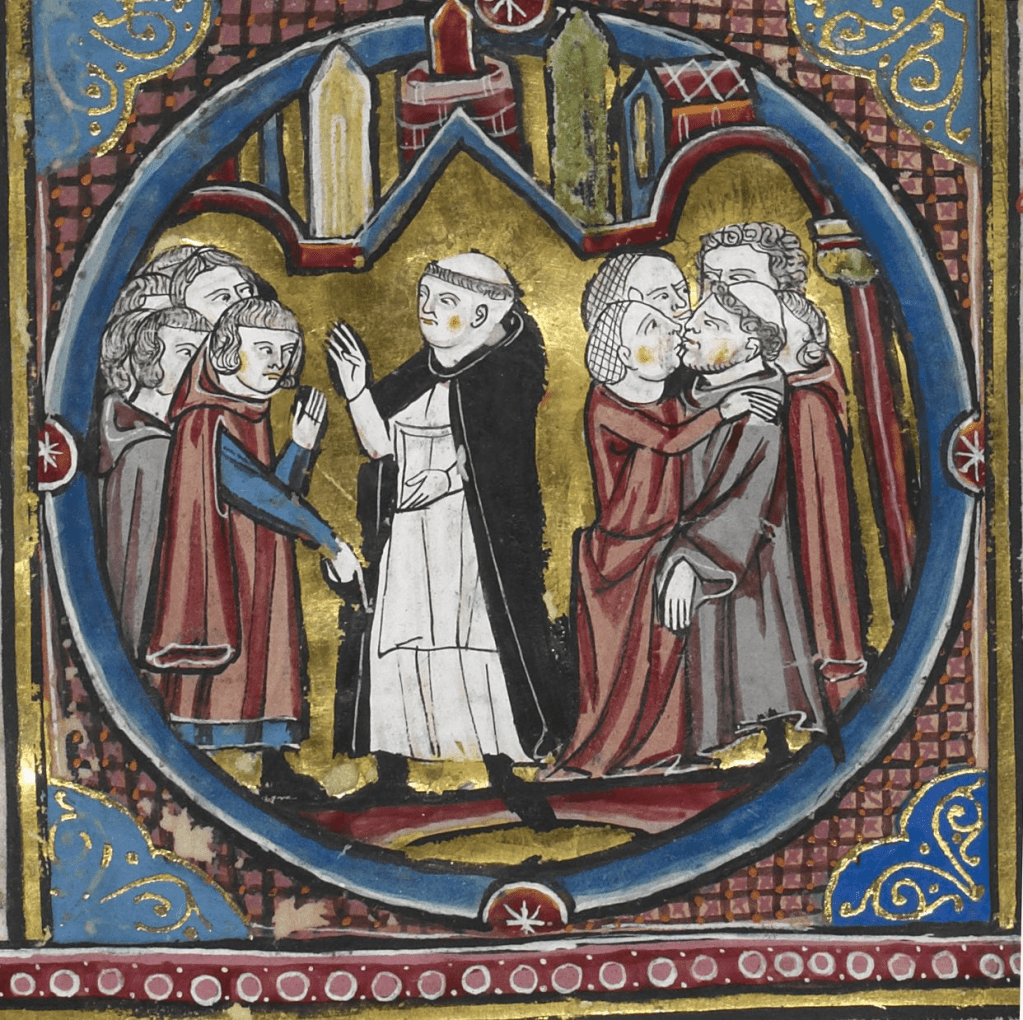
Cropped image from an illuminated manuscript featuring some monks or priests meeting

In an earlier post I detailed my plans for a Liminal campaign set in Edinburgh but I haven’t expanded on my background material in far too long, so this is post in an attempt to kickstart the brain juices and lay the groundwork for the next scenario which I am developing.

Since my last post I have ran a short scenario for my gaming group, The Case of the Craiglockhart Hydra, which dealt with a haunting at a college campus in the city. It was a purposefully short scenario and included several options for the players to reach a resolution, my goal being to make it simple and self-contained enough to run at a convention. Ultimately, my players took a couple of nights to complete it, too long for a convention game, but I am hopeful I can make a few tweaks to fix that. I’ll write it up in a future post as I am pleased with the story and themes, which draw upon both local Edinburgh and wider British history. I hope that despite its local scope, it has a wider appeal and I am sure it can be readily adapted to other British locales if desired.

Liminal Edinburgh

My work in progress scenario will introduce some of the other groups inhabiting the Liminal world in Edinburgh and in this post, I will expand on my previous brief description Enlightened Brotherhood, a small, secret magical society, and cover the knowledge the PCs would know, or could simply find out about this organisation.

The Enlightened Brotherhood

While relatively well known to Liminals in Edinburgh, this secretive magical society has little impact or recognition outside of the city. The Order of Merlin is certainly aware of them and the two groups are officially on cordial terms but in reality they interact with each other only rarely. While the Order of Merlin sees its role as the preeminent magical society in Britain, seeking to wield power and influence to get their way, the Enlightened Brotherhood are far more bookish, un-engaged and passive. While not being completed removed from events, their apparent weakness, low numbers and studious neutrality mean that they are rarely a factor in Liminal politics.

The Order of Merlin should technically consult with the Brotherhood on any actions their organisation takes in Edinburgh, but they rarely do, apologising as an afterthought if they have obviously transgressed.

To most of the Hidden World, the Brotherhood seems to be a clannish group of slightly obsessed geomancers who are occasionally spotted working their magic near the main nodes in and around the city. As they only rarely participate in the affairs of Liminals, this does mean that when they make an appearance it is of intense interest to some of the key players and factions in the city.

History of the Brotherhood

As you would expect from such a secretive group, little is known of their true history beyond what passes for common knowledge in Edinburgh. They are claimed to have their roots in the Speculative Society of the mid-18th century but that is contested, and one Fae Lord has claimed that “these middlesome, twistit warlocks have pestered our lands since the time of King James”.

Whatever their origin, they mages that became the Brotherhood came to prominence from the 1760s onwards, taking a keen interest in the creation of Edinburgh’s New Town, promoting it’s development, and providing their expertise as surveyors with exceptional local knowledge. It is long rumoured that they were able to apply a lot of influence to the young James Craig on the alignment of the roads in this grand development, both in the initial proposals to the Lord Provost and latterly when work was started.

Fearing any further encroachment out of the city beyond the cramped Old Town would be a threat to their realms, the local Fae resisted urbanisation plans to the north of Edinburgh as well as growing expansion to the south. As the Nor and Borough Lochs were drained their worst fears were realised when one entrance to the Fae realm located at St Bernard’s Well vanished where cobbled streets were laid down. This ancient locus and several other nodes outside of the city were quickly lost and tensions rose between the Fae and the Brotherhood, with most people foreseeing a major conflict between them as inevitable. In an effort to prevent bloodshed, both sides were called to a meeting by the Maister, and representatives attended a conclave held on Arthur’s Seat at Samhain of that year.

Surprisingly, an agreement was struck by daybreak as the Covenant of the Fae conceded their lost nodes in return for peace with the Brotherhood. None of those present at the meeting have revealed what led to the deal being reached so quickly and on terms so favourable to the mages. To this day, it is still a topic of great speculation whenever the Brotherhood come up in conversation. What on earth made the local Fae, who are as proud, vicious and powerful as any of their race, agree to give up their lands? Did the Brotherhood promise something greater in return? Did they threaten the Fae and if so, what with?

Whatever the actual circumstances of the deal were, no one who was there is talking about it now, and presently both groups are coolly polite to each other.

The Present Day

The Brotherhood are thought to now number around four individuals with perhaps a dozen close allies, including a few Wardens. Their agents have close ties to the local universities, some Government agencies, and private members clubs, though as noted they keep apart from the rest of the Liminal world and whatever their plans are, no one seems to know.

Key Individuals

Vincent Saint

A slightly built and balding man in his 50s/early 60s, Vincent is impeccably dressed in expensive suits, typically in dark shades of green. Little is known of his background and although he has a Home Counties accent, there is a trace of French in his speech , but neither has provided a clue to his origins. He is unfailing polite but is dedicated to protecting the Brotherhood and keeps its secrets at all costs.

Vincent will often look for agents he can use to perform investigations while letting the Brotherhood itself remain at arm’s length from any trouble. He is a valuable source of lore, and his colleagues have many magical resources despite their small size.

  • Drive: Keep your secrets, investigate new nodes
  • Physical Skills: Awareness 4
  • Mental Skills: Art 2, Education 5 (Specialisation Mathematics), Lore 4 (Specialisation Nodes),
  • Social Skills: Charm 2, Conviction 4, Empathy 2, High Society 2
  • Traits: Bookworm, Countermagic, Rich, Geomancy (Danger Sense, My Enemies are the Land’s Enemies, One with the Land, Sense of Eyes, Tap Power)
  • Endurance: 7
  • Willpower: 13
  • Damage: d6

Standard

Maister o’ the Auld Toun

A Liminal Crew Patron for an Edinburgh setting

https://whitechapelwitch.tumblr.com/post/106589806391/x

As I mentioned in my previous post, I wanted to pull together some background material for my Edinburgh-based Liminal setting with the focus being on some of the main NPCs and factions I felt the Crew would know about given their involvement in the Hidden World of the city.

The first of these NPCs is a mostly-benevolent city Spirit whose domain is centred on the Old Town of Edinburgh, an area loosely defined by the limits of the Flodden Wall. This NPC will be the main Crew patron in my setting so I have provided a more detailed background to support this important role he will have in the campaign.

History

The Spirit that would become the Maister o’ the Auld Toun or, simply The Maister, has been present on the Castle Rock long before the early inhabitants of Scotland settled on this craggy volcanic plug.

It had been worshipped directly at various times in prehistory but by the time the Romans came to the Lothians, a pantheon of Gods had taken precedence for the inhabitants of the hillfort of Dun Eidyn and the spirit drifted into legend, even amongst the Fae.

As the medieval city of Edinburgh grew the Maister reawakened, perhaps by the incessant human digging into the Castle Rock and began again to make its presence felt. This time though, it was less connected to the rock itself and more attuned with the town and its inhabitants, becoming almost the personification of Auld Reekie and a city spirit in all but name.

Over the next half-millennium, he took on a protectionist and paternalistic role, keeping the Old Town’s inhabitants safe from supernatural threats while attempting to remain as neutral as possible with the other Liminal factions. His powers held many of the doors to the ghost realms beneath the city closed, keeping the monstrous regiment of the angry dead from attacking the living. He also stopped attempts by geomancers to tap the many the nodes in his domain, appearing to them directly and driving them off, or using his allies amongst the Liminals to do the same.

During this time, he accumulated a number of nicknames, these are mostly archaic now, but are still used in derogatory terms by his enemies: Laird o’ the Luckenbooth, The Lumheid and Keek-the-Wynd.

In the last few centuries though his power has begun to dwindle. This is most evident in wintertime, or Samhain, when he is uncommunicative rarely visible. On the shortest days of year Edinburgh’s dimly lit and narrow wynds become more dangerous as his protective wards weaken, the doors to the Ghost Realms begin to crack open and their inhabitants slip out to haunt the living. At this time of year even those without the Sight avoid the deep shadows of the vennels and keep to the busier streets with their modern lighting and the welcome chatter of the living.

At summertime/Beltain though he is at his greatest strength; in August, when the streets are thronged with Festival artists, visitors and tourists he is frequently seen wandering openly amongst mortals, often mistaken for a street performer or gangly stage actor and apparently delighting in the sights and sounds of the Fringe.

Appearance & Demeanour

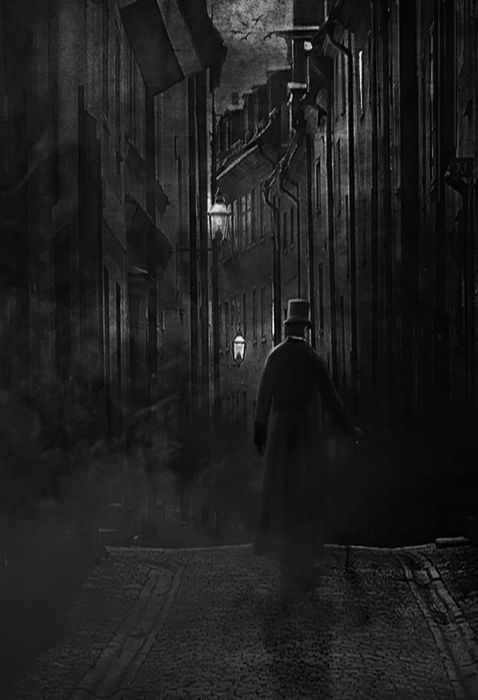
The Maister most commonly adopts the appearance of an unnaturally tall, pale and skinny man dressed in a soot-stained top hat and tails or, some equally grubby Victorian garb. In the Festival season he often appears as a mime artist, street performer or some other bizarre/interesting individual, inspired by whatever act he has watched recently.

He is a Spirit of few words, preferring instead to gesticulate elaborately with his spider-like fingers while using his wide-eyed, expressive face to convey his mood. When he does speak his voice is rather hoarse and quiet which is in contrast to his sharp, icy breath which can chill the air even on the warmest of days.

Base of Operations

The Maister has no particular base of operations in the city and is frequently seen on the streets by characters with the Sight who venture into the Old Town. He tends to avoid encounters in the street though, preferring to meet in the Angus Ogg pub, making his presence known when the Locked Room is opened.

The ‘Angus Ogg’ Pub

The Angus Ogg is one of the oldest, if not the oldest extant public house in Edinburgh. It is however almost completely unknown to the wider public: it does not appear in any guidebooks nor is it included in any tours, yet it is right in the midst of the busy Cowgate, a hotspot of student drinking dens. Only those who have been to the pub before or have been brought by someone who has, can gain access. Regulars wander down Dyer’s Close and if there is no-one else present, an intricately carved door made of unvarnished elm will appear in the wall and open at their approach.

Occasionally the door in Dyer’s Close opens to those not of the Hidden World for reasons that are not understood. These new patrons are often in a desperate situation and always in need of help and this is usually where the PCs come in.

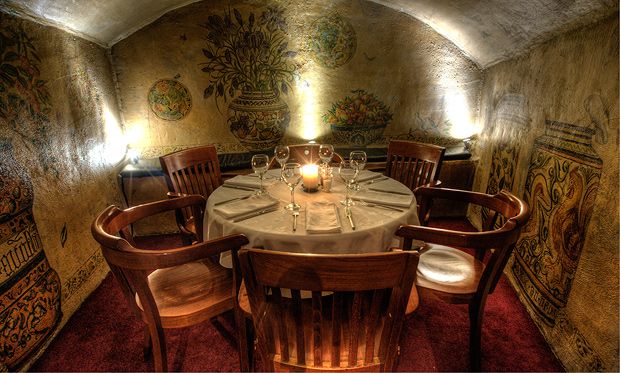
The interior of the Angus Ogg is not significantly different from many of other vaulted underground pubs in Edinburgh with its bricked, curved roof and slightly damp, mouldy air. What does set it apart is its lack of modern conveniences – it is illuminated by a gas lighting whose copper pipes are much in evidence and there is a complete absence of any electrical equipment.

There is a good dozen hand pulls on the large wooden bar offering a variety of beers but most of them will be unfamiliar: Ushers 80/-, Bernards Pale Ale, Drybrough Heavy, etc. The source of these beers from long vanished breweries remains a mystery but the cellar is always well-stocked. Spirits and wine are available and poured from unmarked, corked, clay or glass bottles of indeterminate age. The Angus Ogg never offers food though regulars do bring in their own and the occasional smell of a fish supper or takeaway pizza fills the room on busier nights. The numerous nooks and corners are filled with an eccentric collection of tables and chairs, some are barely functional, but others are obviously of great age and evident value.

The staff of the pub are all Liminals of one description or another, usually outcasts and the lost such as newfound Changelings trying to find their place in the world.

The Angus Ogg’s customers are always those that have glimpsed the Hidden World and need a place of solace on neutral ground or, to relax knowing that their safety is assured. Albert and the staff take the sanctity of the pub seriously and anyone causing trouble is swiftly barred, a rebuke which also carries social consequences with the local Fae.

Behind the bar there is the office, occupied most of the time by Albert, a clockwork man of unknown origin Albert is the acting manager, but he also plies his own trade offering customers intricate tattoos or making fabulous clockwork automata. He was found in the Locked Room some decades back and has remained in the pub since then, rarely venturing out where his large and oddly shaped frame can draw unwelcome attention.

The door to the Locked Room is covered with otherworldly carvings reminiscent of the Apprentice Pillar at Roslyn Chapel. Sinuous designs evocative of Fae or Pictish art overlay clearly biblically inspired motifs. It has no obvious handle or fastening and remains closed until the Maister wishes otherwise and has resisted all magical and mundane attempts to open it. The interior of the Locked Room appears to be the study of a madman and is filled with books, odd paraphernalia, junk and copious quantities of dust. If present, the Maister can be found here reading or puffing on a clay pipe.

As always I welcome comments and suggestions on this post.

Late edit from one of my players – Tom – who suggested this NPC for the Angus Ogg.

Martin

The lonely Echo of a former pub employee who has yet to realise his fate.
Martin was once a rising star in Scottish & Newcastle Pub chain and was on track to be appointed as the company’s youngest area manager when he came tragically unstuck in a Grassmarket cellar in the early 1990s. A furious poltergeist who haunted the pub found the unscrupulous duty manager pouring unfiltered slops back into the 80 shilling ale and decided to make an example of him, pulling down a full keg onto his head.

Thirty years later, still sporting cargo trousers, turquoise shirt, bowl cut and clutching a Filofax, Martin’s ghost found its way to the Angus Ogg. With no real grasp of where he is, or what happened to him, he’s never in one place for long. In his current haunt he can be seen pouring over a ledger in the office, trying frantically to get the floats to balance or slamming down NVQ hospitality paperwork on the bar and bemoaning the slovenly appearance of the staff, the bar and the clientele. Visitors might see him smoking nervously at the end of the bar, fretting over an impending Area Meeting or muttering about ‘targets’.

He is tolerated by the staff who make the pretence of listening to him. On occasion they have caught him in the cellar furtively clutching a filtration kit, which he tries to conceal before dashing for the door.

Standard